
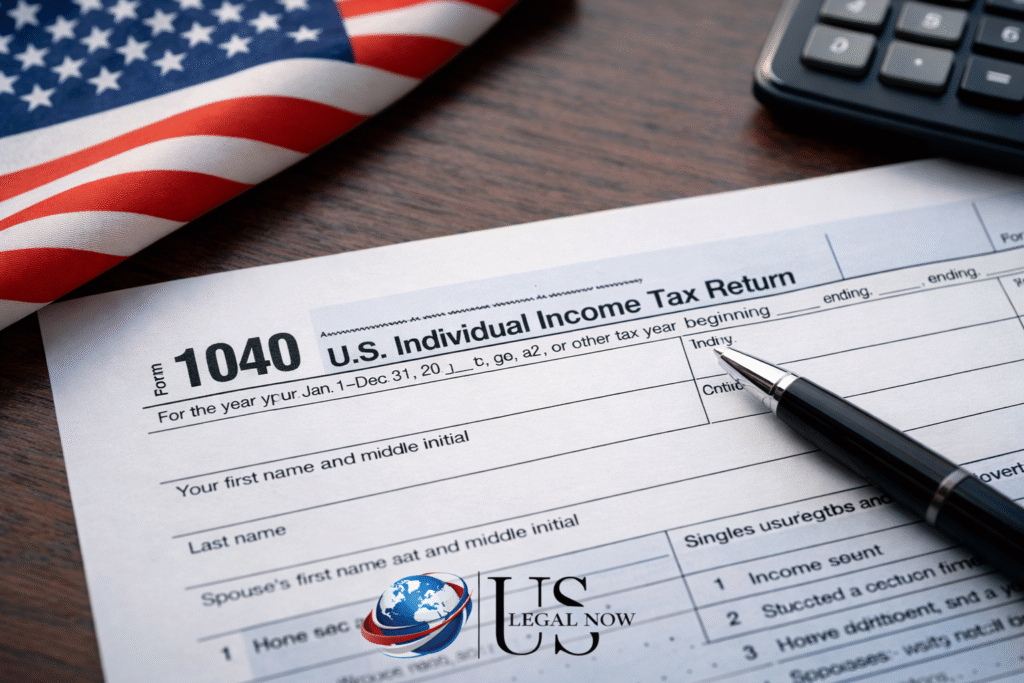
Small errors can lead to significant consequences in immigration processes.
When it comes to immigration to the United States, many people focus only on forms, interviews, and immigration documentation. However, a frequently overlooked factor may influence the progress of the process: tax history.
In recent years, there has been an increase in the level of tax enforcement, especially after the approval of the Infrastructure Investment and Jobs Act, on November 15, 2021. Starting in 2025, new rules began requiring financial platforms to automatically report certain transactions to the government, including digital assets.
Although these changes are fiscal in nature, they reinforce the importance of accuracy in reported information, as this data may be analyzed alongside other official records.
Why does this matter?
Information provided to the government may be analyzed comparatively across different forms and official records.
This means that data reported to the Internal Revenue Service may be cross-checked with information provided in immigration processes, such as visa applications, adjustment of status, or naturalization.
Inconsistencies may raise concerns, such as:
• discrepancies in reported income
• inconsistency in tax residency status
• omission of income
• differing information in prior applications
In practice, this may lead to the need for additional clarification during the process.
What has changed recently?
Based on the changes introduced by the 2021 legislation, stricter tax reporting rules have been implemented.
Starting in 2025, certain financial institutions began automatically reporting information to the government, such as transactions involving digital assets, through specific forms like the Form 1099-DA.
Additionally, the Form 1040 continues to require taxpayers to properly report their financial activities, including operations involving digital assets.
These changes increase the ability to verify reported information, reducing inconsistencies and strengthening enforcement mechanisms.
How does this impact the immigration process?
In certain processes, such as naturalization, compliance with tax obligations may be considered in the evaluation of good moral character, as provided by U.S. immigration law.
Additionally, inconsistencies between information provided over time may raise questions that require clarification.
In such cases, the officer may:
• request additional explanations
• request supporting documents
• analyze the consistency of the information provided
• extend the processing time
How to avoid problems?
Prevention is strategic.
Before starting or reapplying for an immigration process, it is recommended to:
• review prior tax returns
• verify consistency with immigration applications
• correct any errors, when applicable
• align information with the current situation
A careful review of your history can reduce risks and increase the security of the process.
Conclusion
In immigration, consistency is a relevant factor.
Seemingly simple information may be analyzed alongside other data over time.
With proper preparation, it is possible to identify inconsistencies, correct issues, and move forward with greater confidence.
US LEGAL NOW
Turning fear into confidence and information into power.
🌐 www.uslegalnow.com
📞 (227) 227-4508
✉️ [email protected]
Legal Disclaimer: this is not legal advice. We are not attorneys and do not provide legal representation. We offer administrative assistance and document support based on publicly available information. For legal advice, consult a licensed attorney.
Hashtags:
#ImmigrationUSA #TaxCompliance #GreenCardProcess #USCitizenship #ImmigrationTips #IRSCompliance